Six Floral Icons in Vector Review
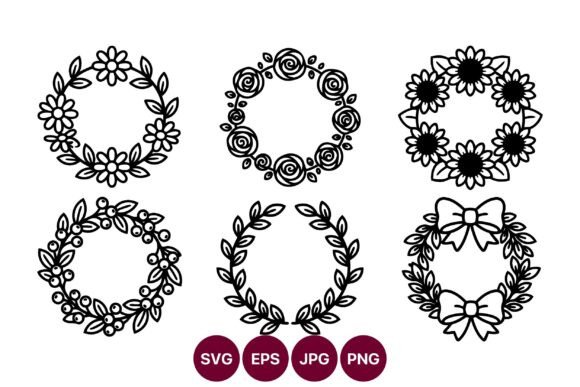
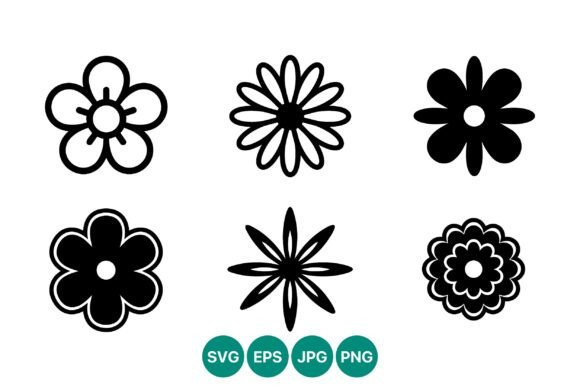
When I sit down to evaluate a new digital asset for my embroidery studio, I am rarely looking for something that screams "flashy." What I need is reliability. I need clean lines that translate well into thread, shapes that hold their structure under tension, and a visual language that speaks clearly to the customer without needing a manual. This is why Six Floral Icons in Vector caught my eye. It arrives as a set of six black silhouettes arranged in a grid, presented as clean vector line art with bold outlines and simple shapes. On the surface, it sounds like a basic graphic pack, but when you strip away the marketing fluff and look at it through the lens of a machine embroidery designer, there is genuine utility here.
The first impression of this design is one of striking clarity. In an industry where so many designs are cluttered with excessive detail, tiny French knots, or overly complex shading that often turns into a muddy mess after stitching, this collection offers a refreshing breath of air. The bold outlines and simple shapes suggest a modern, minimalist aesthetic. It feels less like a vintage botanical illustration and more like a contemporary brand logo or a chic pattern element. For designers who specialize in custom apparel, sweatshirts, tote bags, or baby clothes, this kind of clean geometry is incredibly valuable because it translates predictably from screen to fabric.
Real-World Application: From Screen to Stitch
To truly understand the value of Six Floral Icons in Vector, we have to imagine it in a real project scenario. Let’s say I am preparing a batch of personalized gifts for a boutique client who wants a cohesive "Spring Collection" line. They are asking for embroidered tea towels, aprons, and perhaps a series of decorative pillow covers. A traditional floral design might feel too busy on a kitchen towel, distracting from the actual use of the item. However, these six icons, with their strong silhouettes, would look intentional and stylish.
I can easily see this design being used as a central motif on a heavyweight canvas tote bag. The bold outlines would stitch out beautifully as a satin stitch border, creating a crisp frame around the flower shape. Alternatively, using them as a repeating pattern along the hem of a sweatshirt or the cuff of a baby onesie adds a touch of professionalism without overwhelming the garment. The simplicity allows the texture of the fabric—whether it is soft cotton jersey or durable denim—to play a role in the final look, rather than competing with intricate stitch work.
This approach also works exceptionally well for embroidered patches. Because the shapes are distinct and the negative space is clear, the patch will read well even from a distance. For craft fair products or Etsy listings, visual clarity is king. Customers scrolling through mobile devices need to instantly recognize what they are buying. A design that relies on subtle gradients or tiny details often loses its impact on a small thumbnail. Six Floral Icons in Vector maintains its integrity at any scale, making it an excellent choice for digital product sellers who create printable mockups or digital embroidery files.
Technical Considerations and Fabric Compatibility
While the vector nature of the source file is promising, the translation to embroidery requires careful planning. The description notes high contrast, which is a huge advantage, but it also means we must be strategic about placement. These designs perform best on stable, woven fabrics. If you are planning to use this for custom apparel made from thin fabric or stretchy knit materials, you must reinforce your stabilizer choices. A tear-away stabilizer might not be enough for the dense areas of the bold outlines; a cut-away stabilizer is likely necessary to prevent puckering over time, especially for items that will undergo frequent washing.
There are specific scenarios where this design needs careful handling. Using it on curved surfaces like caps or hats can be tricky if the underlying mesh distorts the circular symmetry of the flowers. Similarly, placing these icons on dark fabric requires a solid underlay or a backing layer to ensure the black silhouette pops against the background. If you are working with textured fabrics, such as terry cloth for towels or boucle for blankets, the fine details of the vector lines might get lost. In those cases, scaling the design up is crucial to maintain definition.
Another critical factor is thread color. While the source is black silhouettes, embroidery rarely stays strictly monochromatic unless that is the desired effect. If you plan to fill these shapes with various thread colors, you need to test the contrast carefully. A light blue fill on a white background might lack the punch needed for the design to stand out. I recommend testing the design in black and white mockups first to check the balance of positive and negative space. Once the structure feels right, you can experiment with thread colors that complement your brand palette.
Practical Designer Notes for Execution
Before committing to a full production run, whether for a commercial embroidery project or a personal handmade product, follow these practical steps:
- Test on Scrap Fabric: Always stitch out a sample on the exact fabric you intend to use. This reveals how the material reacts to the stitch density and whether the stabilizer provides adequate support.
- Check Stitch Density: Review the digitizing to ensure the satin stitches are not too tight, which can cause thread breakage, or too loose, which can lead to fuzziness. Adjust the settings if necessary.
- Confirm Hoop Size: Ensure the total dimensions of the six icons fit within your machine's hoop size. If you are using them individually, verify that the individual sizes are appropriate for the intended product, such as a baby embroidery project versus a large wall hanging.
- Inspect Small Details: Look closely at the corners and curves of the vector shapes. Are there any sharp angles that might not stitch cleanly? Smooth them out in your editing software before exporting the embroidery file.
- Review Licensing: If you are an Etsy seller or running a small shop product business, double-check the license terms. Confirm whether you are allowed to sell finished items made with this design. Some licenses restrict commercial use, while others allow it with attribution.
Brand Consistency and Customer Trust
One of the most underrated aspects of using clean, vector-based designs like Six Floral Icons in Vector is the impact on brand consistency. When a buyer receives a handmade product, they are often judging the quality based on the finish. A design that looks sharp, professional, and intentional builds trust. It signals that the maker cares about the details. In contrast, a poorly executed, blurry, or misaligned design can make even a high-quality garment feel cheap.
This set of graphics allows for versatile branding. You can use one icon as a logo on a hang tag, another as a decorative element on the inside seam of a tote bag, and a third as part of a larger pattern on a holiday gift box. This cohesion elevates the perceived value of the finished product. For creative entrepreneurs and makers, this kind of versatility is hard to beat. It saves time on design creation while providing a polished result that appeals to a wide audience, from hobbyists looking for a unique gift to corporate clients seeking branded merchandise.
Final Verdict
Six Floral Icons in Vector is not just a collection of pretty pictures; it is a functional tool for serious embroidery projects. Its strength lies in its simplicity and adaptability. It avoids the pitfalls of overly detailed designs that fail in execution and instead offers a robust foundation for creating professional-looking goods. Whether you are designing for a niche market of nursery decor enthusiasts or mass-producing custom apparel for a seasonal launch, this design asset provides the clarity and confidence needed to succeed. Just remember to respect the technical limitations of your machine and fabric, and always prioritize a clean finish. When done right, these six icons can become a signature element in your portfolio, driving engagement and recognition for your craft business.